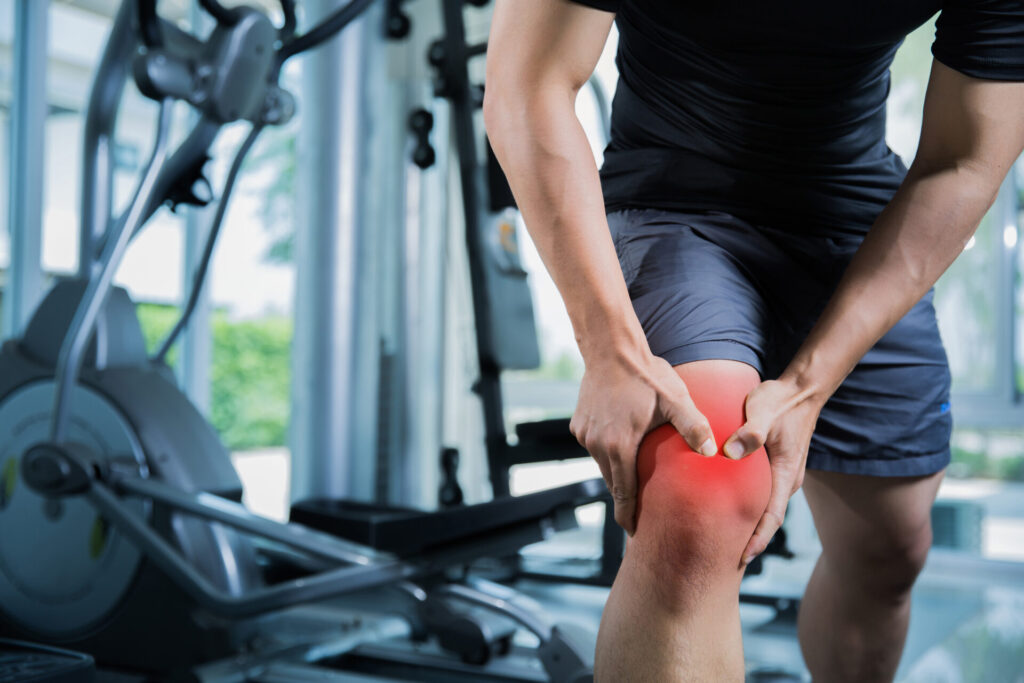
Knee pain is one of the most common issues we see at The Body Diagnostic, and it affects people of all activity levels and ages. It can be caused by a wide range of underlying factors – not all of which are located directly in the knee itself.
Common sources of knee pain include weakness in the hips and glutes, overuse injuries, poor gait mechanics and previous injuries such as ACL tears or meniscus damage. Many of these issues develop slowly over time, especially in people who lead active lives or who may have returned to exercise after time off. In other cases, pain may follow a past injury that never fully healed.
It’s also important to note that the knee is often the victim of issues happening elsewhere – especially in the feet, hips, or core. That’s why a full-body assessment is crucial when understanding how and why knee pain is occurring.
The symptoms of knee pain can vary widely from person to person. Some people feel it when walking up or down stairs, others during squats, lunges, or kneeling. Pain may show up when running, or even when sitting still for long periods. A few of the most common
symptoms we see include:
Over time, these symptoms can lead to a loss of mobility and confidence. You might start avoiding your favourite activities because you don’t want to “set your knee off.” This can lead to frustration, reduced fitness and even further weakness in the muscles that support your knees – creating a cycle that’s hard to break without help.
At The Body Diagnostic, our approach to knee pain is never one-size-fits-all. We begin by taking the time to identify the true cause, not just where the pain is showing up.
In many cases, the knee pain isn’t the real problem – it’s the result of poor movement patterns, weak muscles, or biomechanical imbalances elsewhere in the body. That’s why we carry out a thorough assessment, including gait analysis and foot mechanics evaluation, to understand how your entire body is moving.
From there, we provide hands-on therapy to ease pain and improve joint function. This helps restore movement and reduces inflammation or tension around the knee.
But hands-on care is just the beginning. We then move into a structured rehabilitation plan designed to build long-term strength and prevent recurrence. This includes:
This phased rehab approach means we support you from pain relief all the way through to full recovery – so you can return to the activities you love, pain-free and stronger than before.