Frozen Shoulder Treatment in Rayleigh: Why Your Shoulder Is Becoming Stiff

Frozen shoulder is a common condition that affects many adults, particularly those over the age of 50.
It often begins gradually, with mild discomfort and stiffness, before progressing to more noticeable restriction in movement.
For many people in Rayleigh and across Essex, the biggest frustration is not just the pain, but the loss of movement and independence.
What Is Frozen Shoulder?
Frozen shoulder, also known as adhesive capsulitis, is a condition where the shoulder joint becomes stiff and restricted.
This happens when the capsule surrounding the joint becomes tight and less flexible.
Over time, this reduces the shoulder’s ability to move freely.
Early Signs of Frozen Shoulder
Frozen shoulder usually develops slowly.
Common early symptoms include:
- stiffness when reaching overhead
- difficulty putting on clothes
- pain when lying on the shoulder
- reduced movement when reaching behind your back
These symptoms often worsen gradually over time.
Why Does Frozen Shoulder Happen?
The exact cause is not always clear, but several factors are linked:
- reduced movement after injury
- prolonged inactivity
- previous shoulder issues
- age-related changes
In many cases, it develops without a clear cause.
Why It Feels Like It’s Getting Worse
Frozen shoulder typically progresses through stages.
In the early stage, pain increases.
In the second stage, stiffness becomes more noticeable.
Without the right approach, movement can become more restricted over time.
Frozen Shoulder Treatment in Rayleigh
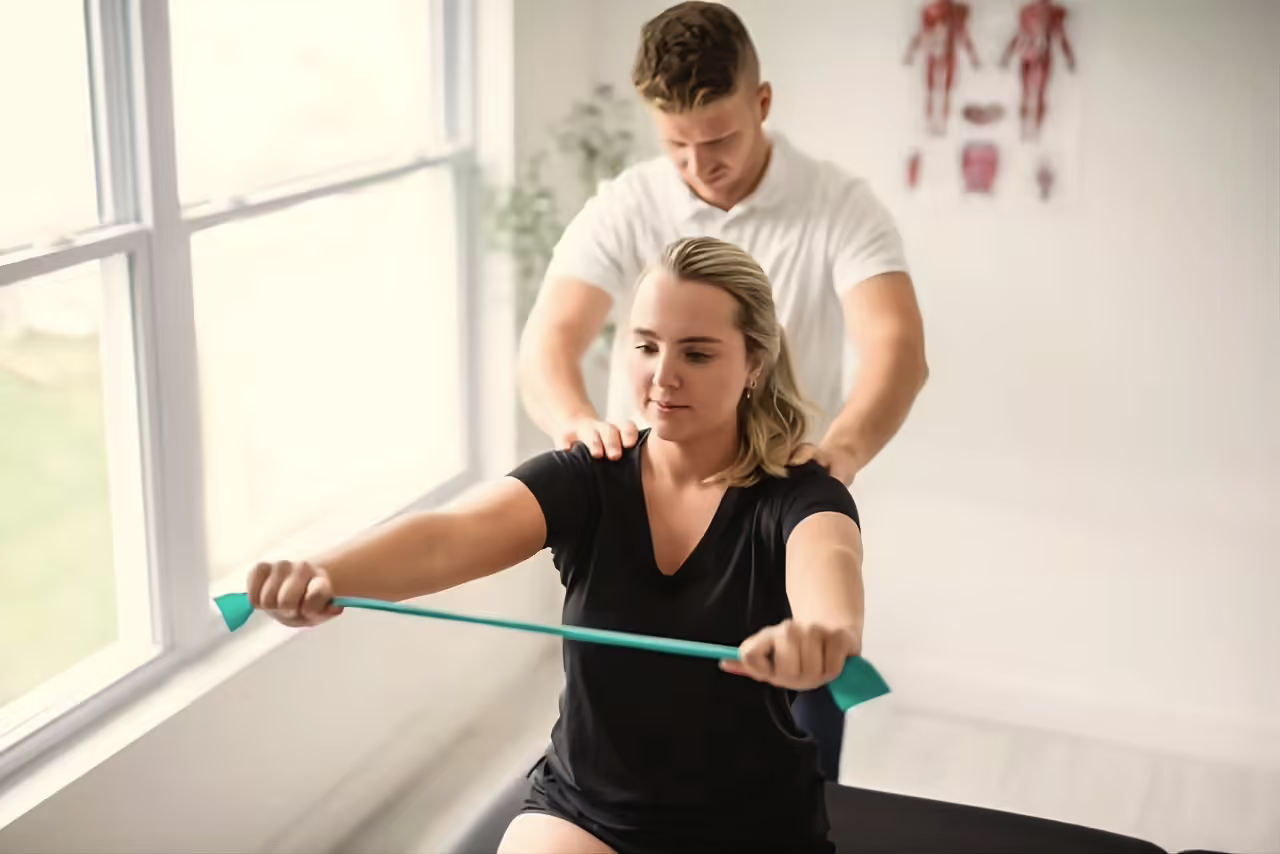
At The Body Diagnostic in Rayleigh, the focus is on understanding the stage of the condition and helping restore movement gradually.
Treatment may involve:
- improving mobility
- reducing stiffness
- restoring strength
- guiding safe movement
FAQ
- What are the first signs of frozen shoulder?
Early signs include stiffness, difficulty reaching overhead, and pain when moving the shoulder.
- Can frozen shoulder go away on its own?
It can improve over time, but recovery is often slow without the right approach.
- Why is my shoulder getting stiffer?
This is usually due to tightening of the joint capsule, which restricts movement.